Coventry-based Nitrogen Supply Co. (NSC) has been recognised by KPMG UK as the “Most Promising Mid-Sized Business” for its groundbreaking Nitrogen-as-a-Service (NaaS) solution.
Nov, 2025
Coventry-based Nitrogen Supply Co. (NSC) has been recognised by KPMG UK as the “Most Promising Mid-Sized Business” for its groundbreaking Nitrogen-as-a-Service (NaaS) solution.
At the close of the fiscal year 2024/25 on June 30, 2025, the TRUMPF Group recorded a decline in revenue of 16% to 4.3 billion euros (2023/24 fiscal year: 5.2 billion euros).
The new Lantek Assembly to Nesting (A2N) is an advanced importer for 3D parts and assemblies designed for nesting, cutting, and/or cost estimation.
Hutchinson Engineering has recently launched a free 15-page guide called “The Future of Engineering” packed with real-world examples, practical insights, and what the company has learned from working with some of the UK’s most forward-thinking manufacturers.
Laser subcontractor Midtherm Laser has helped to bring the NHS Rainbow at Dudley’s Russell’s Hall Hospital to life.
Lasermet has announced the launch of the DragonDoor, the next evolution in safety for modern medical facilities. Designed for three-fold protection against laser, X-ray, and fire, the DragonDoor represents a new benchmark in integrated safety design for medical environments.
Modern vehicles are typically fitted with multiple airbags as standard to protect both the driver and passengers. Airbag materials are usually made from densely woven nylon or polyester fibres and are often silicone coated to achieve the desired air permeability.
TRUMPF has launched the new generation of its TruLaser Weld 5000 automated laser welding machine. Compared to the previous series, the machine can be set up much more quickly and easily.
Tie Down Engineering is a multi-division manufacturer in Atlanta, US, and provides parts across industries ranging from mobile home anchoring to rooftop safety systems, and agricultural equipment. A bottleneck in their processing line was slowing production which is where Eagle stepped in.
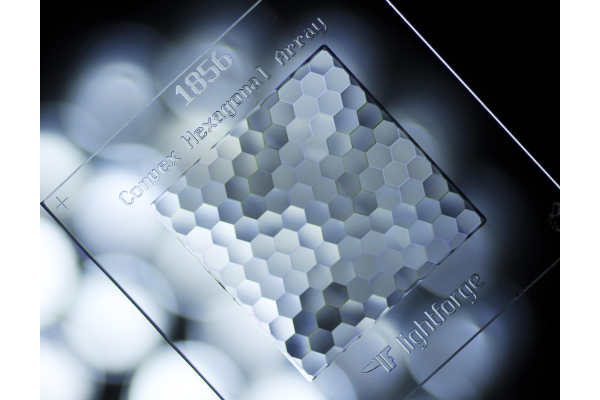
A leading laser micromachining systems manufacturer faced a recurring issue: waveplates in their laser systems were degrading too quickly, undermining the long-term stability of polarisation control in ultrafast laser beam paths. Their requirement was clear – all optical components must last at least five years to ensure the machine’s reliability.